Packaging guide
How to Reduce Shipping Damage: Match Packaging to Product (2026)
Learn how to reduce shipping damage by matching mailers, boxes and void fill to each product, and see how damage costs compare with better materials.
Updated Nov 12, 2026
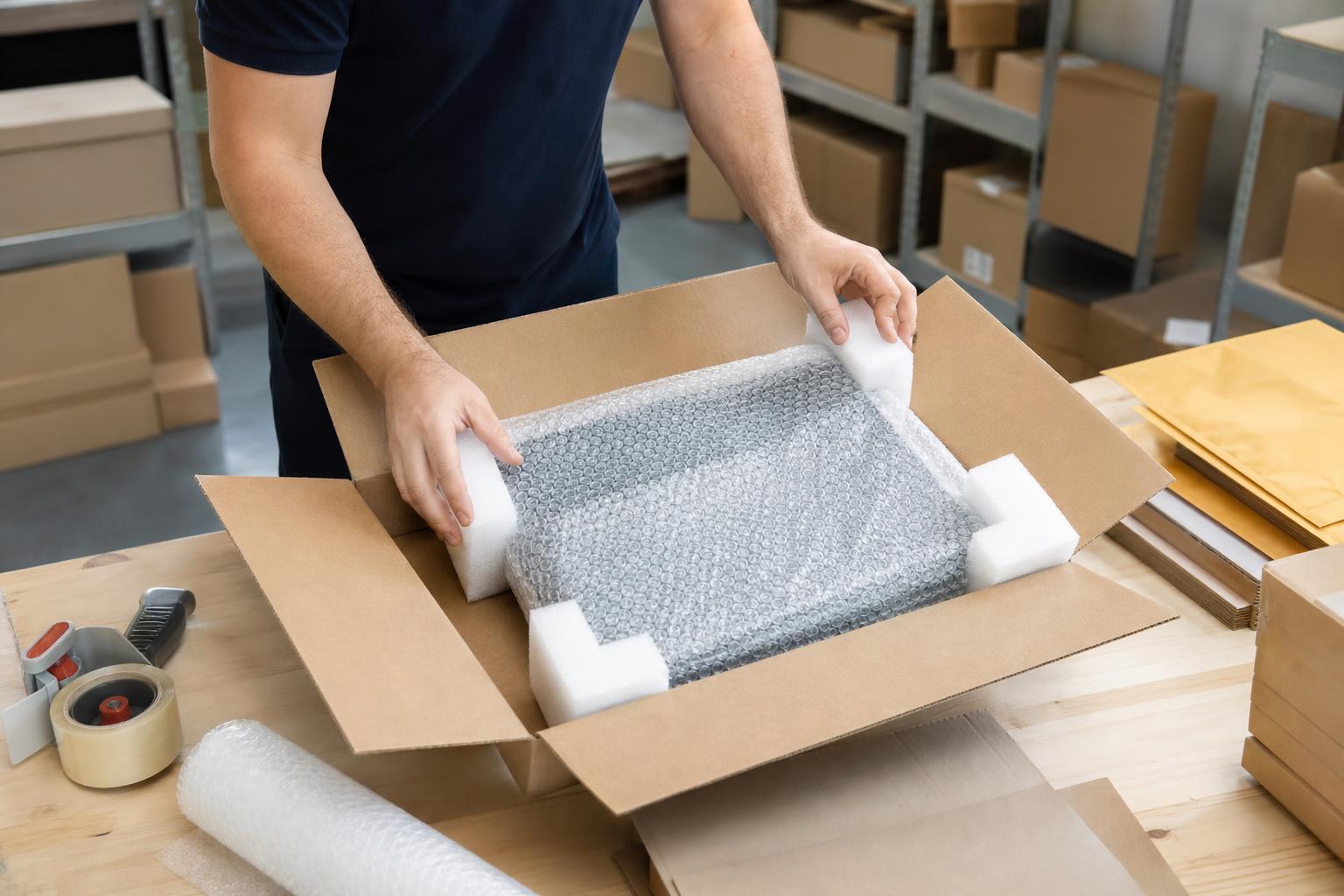
If you want to know how to reduce shipping damage, start with one idea: every product needs packaging chosen for how it can break, not just how much it weighs. A cotton T-shirt, a ceramic mug and a boxed electronic device fail in completely different ways, so one standard bag or carton will always be too weak for some orders and too costly for others. This guide explains where damage comes from, how to match mailers, boxes and void fill to each product, and how to compare the cost of a damaged parcel with the cost of better materials. It is written for ecommerce businesses and retailers shipping anywhere in the world, so we use metric and imperial units and flag where practice differs between regions.
In this article
- Key takeaways
- Where shipping damage really comes from
- What damage costs compared with better packaging
- Match the packaging type to the product
- Choosing the right box, board grade and size
- Void fill options and protective packaging for shipping
- Packing fragile items step by step
- Pallets, cartons and freight: protecting bulk shipments
- Testing, tracking and improving your damage rate
- Conclusion
Key takeaways
- Most damage comes from a small set of causes: drops, compression, punctures, moisture and product movement inside the pack.
- Match the pack to the product: poly or kraft mailers for soft goods, bubble mailers for light rigid items, corrugated boxes with cushioning for fragile or heavy goods.
- A box that is too large is a common hidden cause of damage, because the product has room to move and the walls lose strength when crushed.
- Compare cost per order, not cost per unit: a few cents on better materials often costs less than one replacement, return label and support ticket.
- Test your pack with a simple drop test and keep a damage log so you change materials based on evidence.
Where shipping damage really comes from
Before you change any materials, it helps to know what is actually going wrong. Parcel networks in every country use sorting machines, conveyors, vans, aircraft and containers, and each handoff adds risk. Damage tends to fall into a few repeatable categories, and each has a different fix.
Drops, compression and vibration
Drops cause impact damage: cracked glass, dented corners, broken zips and crushed retail boxes. Compression happens when parcels are stacked in a cage, trailer or pallet, so the bottom cartons carry the weight of those above. Vibration is slower but real: over long journeys, products rub against each other or the box wall, scuffing finishes and loosening parts. Drops call for cushioning, compression calls for stronger board and correct sizing, and vibration calls for snug, immobilised packing.
Punctures, tears and moisture
Sharp corners of a product can pierce a thin mailer from the inside, and conveyor equipment can snag a weak seal from the outside. Rain, condensation and wet depots also weaken paper-based packaging and ruin unprotected goods. If tearing is your main problem, our guide to poly mailers tearing in shipping covers thickness, seals and packing habits that cause failures.
Movement inside a box that is too big
Many damage claims trace back to empty space. If a product can slide or tumble, it hits the wall with more force on every knock. Oversized boxes also bulge and collapse more easily when loaded. Reducing empty space with the right box size and sufficient void fill is often the cheapest improvement you can make.
What damage costs compared with better packaging
Damage is easy to under-count because the cost is spread across several departments. Looking at the whole chain makes better materials much easier to justify, and it also stops you over-spending on products that do not need it.
The true cost of one damaged order
When a parcel arrives broken, you usually pay for more than the item. Add up each of these:
- The replacement product or the refund.
- A second outbound shipping charge, and possibly a return shipping label.
- Replacement packaging and pick-and-pack labour.
- Customer service time handling the complaint and any carrier claim.
- The lost margin on the original sale, plus the risk of a poor review or a lost repeat customer.
A simple break-even example
The figures below are illustrative only, in any currency unit. Replace them with your own numbers, or use our packaging cost per order worksheet to build a proper baseline.
| Item | Current pack | Upgraded pack |
|---|---|---|
| Orders per month | 2,000 | 2,000 |
| Damage rate | 3% | 1% |
| Damaged orders | 60 | 20 |
| Total cost per damaged order (product, shipping, labour, support) | 40 | 40 |
| Monthly damage cost | 2,400 | 800 |
| Extra packaging cost per order | 0 | 0.25 (500 in total) |
| Total monthly cost | 2,400 | 1,300 |
In this example the better pack saves 1,100 a month even after paying for the extra material. If your damage rate is already very low, the maths may point the other way, and that is a useful result too.
Hidden costs that never reach the claims form
Carrier claims often pay less than your full cost, take weeks and require evidence, and many carriers exclude poor packing from cover. Claims also do nothing for customer trust. Reducing product returns for damage protects margin that no claim can recover.
Match the packaging type to the product
The most useful habit is to sort your catalogue into product groups and assign each a standard pack. This avoids both under-packing fragile lines and wasting money on heavy-duty cartons for T-shirts.
| Product type | Main risk | Suitable packaging |
|---|---|---|
| Apparel, textiles, soft goods | Moisture, tears, dirt | Poly mailers, kraft paper mailers, recycled or compostable mailers |
| Books, small flat items, accessories | Bent corners, scuffs | Bubble mailers or ecommerce mailer boxes |
| Cosmetics, jars, small electronics | Impact, crushing | Mailer box or corrugated box with paper wrap or bubble wrap |
| Glass, ceramics, bottles | Impact, vibration, breakage | Corrugated box, honeycomb paper wrap or bubble wrap, extra clearance around the item |
| Heavy or bulky goods | Compression, box failure | Strong corrugated board, tight fit, reinforced sealing |
Soft goods and apparel
Clothing rarely breaks, so protection is about keeping it clean, dry and sealed. A poly mailer is lightweight and cheap to ship. Choose thickness and seal quality for the weight of what you send, and see our guides on choosing a poly mailer size and thickness. Kraft paper mailers and recycled or compostable options suit brands that want a paper look or lower plastic use, but check moisture exposure and local claims rules first.
Rigid items that are not fragile
Items like books, phone cases and small tools need stiffness more than cushioning. Bubble mailers add a light buffer, and mailer boxes protect corners and edges from crushing. These are often the best choice for light products that a flat bag would let bend.
Fragile, heavy or high-value goods
Here, use a corrugated shipping box with deliberate cushioning. Do not rely on a bag for anything that can shatter or that costs a lot to replace. The higher pack cost is usually small compared with the order value and the cost of a failure.
Choosing the right box, board grade and size
A box is a structure. Its strength comes from the board, the size and the closure, and a weakness in any of the three can undo the others.
Fit matters more than strength
Choose a box with enough internal space for the product plus cushioning on every side, but no more. A common rule of thumb for fragile goods is around 5 cm (2 in) of cushioning between the product and the box walls, though heavier or more delicate items may need more. An empty box gap invites movement; an overfilled box bulges and puts pressure on the contents. Keeping a short range of well-chosen sizes also simplifies stock and picking.
Understanding flute and wall thickness
Corrugated board is made of liners and a wavy fluted layer. Common flute types are E (about 1.5 mm, 0.06 in), B (about 3 mm, 0.12 in) and C (about 4 mm, 0.16 in), and board can be single wall or double wall. Thinner flutes print and fold neatly, while thicker flutes usually give more cushioning and stacking strength. Strength ratings such as edge crush test values are quoted differently between regions, so ask any supplier exactly what a rating means. Our wholesale corrugated shipping boxes guide goes deeper on sizes, board grade and cost per box.
When a mailer box beats a shipping box
Ecommerce mailer boxes are self-locking, ship flat and give a tidy unboxing result. They suit light, medium-sized goods that need rigidity but not heavy stacking strength. For heavy or very fragile goods, a regular corrugated shipping box with extra cushioning is usually the safer option.
Void fill options and protective packaging for shipping
Void fill and wrap do two jobs: they absorb shock and they stop the product moving. The best choice depends on the product, your pack speed, local recycling rules and customer expectations.
Kraft paper and honeycomb paper wrap
Kraft paper is a flexible filler that you can crumple, fold or pad around a product. Honeycomb paper wrap expands into a cushioning structure and wraps products directly, which makes it a strong alternative to plastic for many orders. Both are widely accepted in paper recycling streams, though kerbside rules differ by country and area. Read how honeycomb paper wrap works and where its limits are before relying on it for very heavy or very sharp items.
Bubble wrap and bubble mailers
Bubble wrap is a familiar cushioning layer and works well wrapped around individual items. Bubble mailers combine the bag and the cushion for lighter goods. Bubble size matters: larger bubbles generally cushion heavier items, while smaller bubbles suit surface protection.
Choosing by weight and fragility
| Situation | Good option | Watch out for |
|---|---|---|
| Light, slightly fragile item | Bubble mailer or paper wrap in a mailer box | Thin flat bags that offer no impact protection |
| Medium weight, breakable | Honeycomb or bubble wrap plus filler in a corrugated box | Gaps at the corners and under the item |
| Heavy and fragile | Double wrapping with tight packing, strong board | Void fill that compresses and lets the item shift |
| Mixed multi-item order | Wrap each item separately, then fill | Items touching each other |
Packing fragile items step by step
Good materials only work when used consistently. A written pack standard for each product line helps new staff pack the same way every time, which is how you prevent damaged packages at scale.
The inner wrap and the 'box in box' decision
- Wrap the product individually so no surface can touch another item or the box wall.
- Place a cushioning layer on the bottom of the box.
- Centre the product, leaving clearance on all sides.
- Fill every gap so that nothing moves when you shake the closed box gently.
- Add a top layer of cushioning before closing the flaps.
For very delicate or high-value goods, consider packing the item in a snug inner box and placing that inside a larger outer box with cushioning between them. This takes more time and material, so reserve it for products where the cost of failure is high.
Sealing and labelling the parcel
Close the box with tape across the centre seam and along both edge seams, using pressure-sensitive tape suited to the board and the conditions. Place the label on one flat face, away from seams, and avoid wrapping it over edges where it can tear. Include a second copy of the address inside the parcel. For a checklist of tape and label specs, see our bulk packing tape and shipping labels specs checklist.
Pallets, cartons and freight: protecting bulk shipments
If you send stock to a warehouse, a retailer or an overseas buyer, damage often happens at the pallet level, and the lessons differ slightly from single-parcel shipping.
Stretch film and load stability
A properly wrapped pallet moves as one unit. Loose or uneven wrapping lets cartons shift, and shifting cartons rub, tear and collapse. Anchor the film to the pallet base, overlap layers, and make sure the corners of the load are covered. Heavier film gauges and more wraps suit heavier or less stable loads. Our guides on how to wrap a pallet with stretch film and stretch film gauge and usage per pallet go through layers and common mistakes.
Labels that survive the journey
Barcodes that smudge or peel cause misrouting, and misrouted parcels spend longer in the network and get handled more. Use labels that match your printer type, apply them to a clean, dry, flat surface, and place a label on two sides of pallets so that it can be scanned from either side. Standards and carrier requirements differ across countries, so confirm your carrier's label rules before a large order.
Testing, tracking and improving your damage rate
You do not need a laboratory to improve your pack. You do need a repeatable method.
Run a simple drop test
Pack a real product exactly as you ship it and drop it from about waist height (roughly 80 to 100 cm, or 30 to 40 in) onto each face, edge and corner, checking the product after each drop. If it fails, add clearance, wrap or a stronger box and test again. Industry bodies such as ISTA publish formal test procedures that cover vibration, compression and drop sequences, which are worth reviewing if you ship high volumes or high-value goods. A home test is a screening tool and not a guarantee of how a parcel will fare in a real network.
Log every damaged order
Record the product, the pack used, the carrier, the route and the type of damage, and ask customers for a photo of the parcel and the contents. After a month or two you will see patterns: one SKU, one carrier lane or one packer, for example. Fix the biggest pattern first.
Buying in bulk without overbuying
Once you know your standard packs, buy them in volume so you can price the material per order. At Pack Merchants we sell in bulk only, with a $500 minimum per product and published volume pricing. Custom packaging and freight are quoted per order, and we take payment by bank transfer or USDT, which is the only cryptocurrency we accept. We do not offer credit or Net terms, so plan quantities against your cash flow and storage space. Test any new pack on a small batch of real orders before standardising it across the catalogue.
Conclusion
Damage in transit is usually caused by a handful of predictable problems: impact, crushing, punctures, moisture and loose products. Reducing it comes down to sorting products by how they fail, choosing the right mailer, box and cushioning for each group, sealing and labelling consistently, and testing the result. Comparing the full cost of a damaged order with the cost of better materials shows where an upgrade pays for itself and where it does not. Keep a damage log, adjust based on evidence, and standardise the packs that work.
Frequently asked questions
What is the most common cause of shipping damage?
Impact from drops and compression from stacking are the most common causes, often made worse by a box that is too large or poorly filled. Punctures and moisture are the next most frequent. A damage log will show which cause affects your products most.
How much void fill should I use in a box?
Use enough to stop the product moving when you gently shake the closed box, with cushioning on every side. A common rule of thumb for fragile goods is about 5 cm (2 in) of clearance filled with cushioning. Heavier or more delicate items may need more.
Are poly mailers safe for fragile items?
No. Poly mailers protect against dirt and moisture but offer little impact or crush protection. Use them for soft goods, and choose a bubble mailer, mailer box or corrugated box with cushioning for anything breakable.
Is paper void fill as good as plastic?
Paper fillers such as kraft paper and honeycomb wrap can protect many products well, especially when packed snugly. Very heavy, sharp or highly fragile items may need extra layers or a different material. Recycling rules for paper differ by country, so check local guidance if you make recycling claims.
Is it cheaper to use better packaging or pay for damaged orders?
It depends on your damage rate and order value. A damaged order costs the product, a second shipment, labour and support time, so a small extra cost per order often pays off when the damage rate is meaningful. Work out your own numbers with a cost per order worksheet.
Does carrier insurance replace good packaging?
No. Insurance may pay some of the loss, but claims take time, often require proof of proper packing, and do not cover lost customer trust. Good packaging prevents the loss in the first place.
How do I test whether my packaging is strong enough?
Pack a real product as you would ship it and drop it from about waist height onto faces, edges and corners, then inspect it. For high volumes, review formal methods published by bodies such as ISTA. Use test results alongside your real damage data.
What is the minimum order for bulk packaging from Pack Merchants?
We sell in bulk only, with a $500 minimum per product. Custom packaging and freight are quoted per order, and payment is by bank transfer or USDT. We do not offer credit or Net terms.
Still not sure?
Tell us what you ship and roughly how much of it, and we will recommend a specification and price it.