Packaging guide
Poly Mailers Tearing in Shipping: Causes and Fixes (2026)
Poly mailers tearing in shipping? Diagnose thickness, overpacking and weak seals, then fix each cause with a practical test plan and clear specs.
Updated Nov 11, 2026
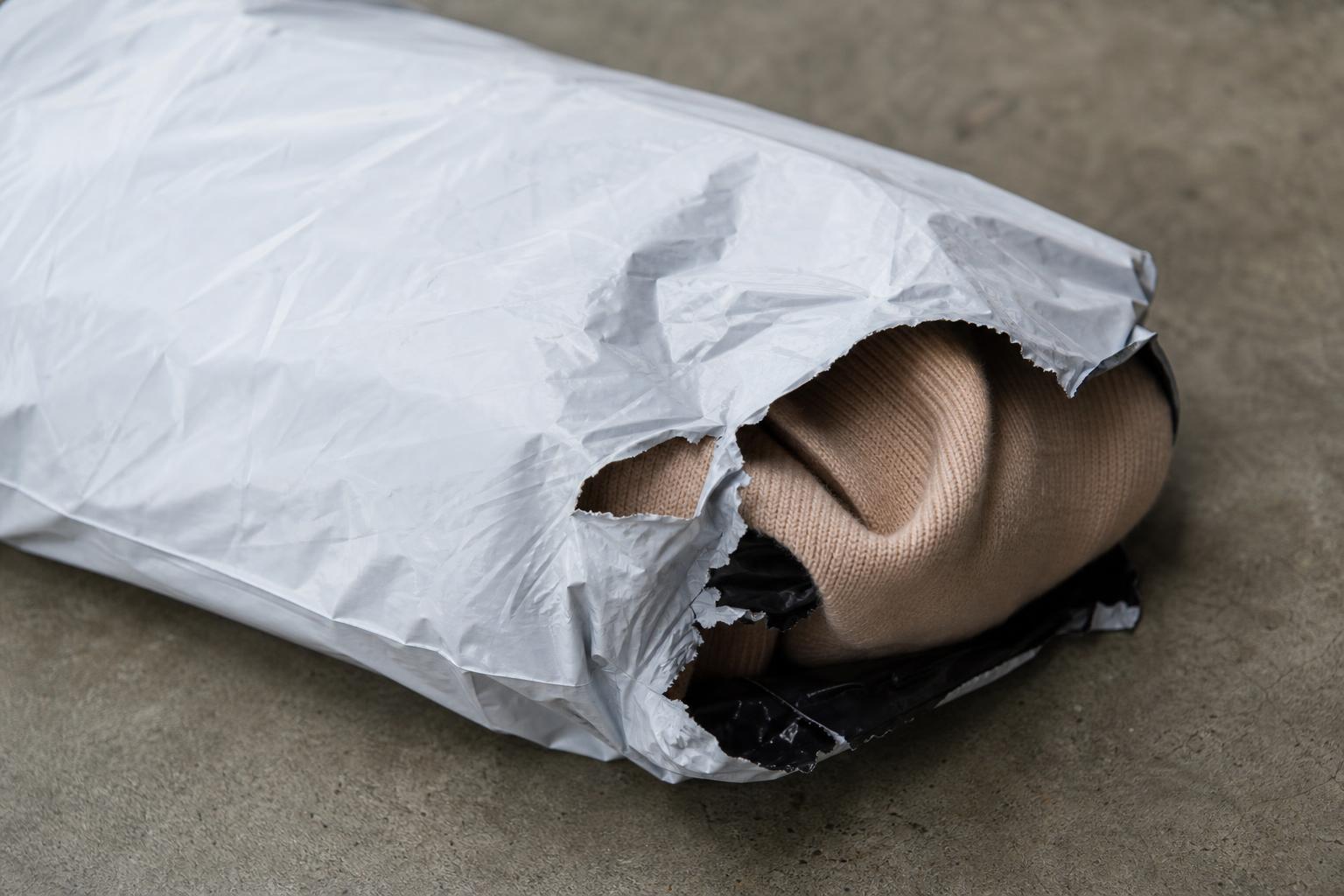
Poly mailers tearing in shipping is one of the most expensive small problems in ecommerce. A split seam or ripped corner means a replacement order, a refund, an unhappy customer and a carrier claim that is often refused because the pack was judged inadequate. The good news is that torn mailers rarely fail at random. The tear pattern, the film thickness, how full the bag was and how well it was sealed usually point to one clear cause. This guide shows you how to read a failed mailer, decide whether thickness, overpacking or seal quality is to blame, and fix it with changes you can test in your own warehouse before you reorder in bulk.
In this article
- Key takeaways
- Read the damage: what a torn poly mailer is telling you
- When a poly mailer is too thin for what you ship
- Overpacking and wrong sizing: the most common cause of burst seams
- Seal quality: why the adhesive strip or seam fails
- Transit and storage conditions that weaken mailers
- A step-by-step plan to stop mailers tearing
- When poly is the wrong pack
- Buying poly mailers that hold up in bulk
- Conclusion
Key takeaways
- Look at where and how the mailer failed first. A split seam, a popped adhesive strip and a punctured film each have a different fix.
- Overpacking is the most common cause. If the bag bulges, the seams carry the load and burst under compression.
- A thicker film helps only if the film quality and seam welds are also sound. Thickness on its own is not a guarantee of strength.
- Seal failures are often caused by dust, wrinkles, extreme temperatures or a poor press, not just weak adhesive.
- Some products do not belong in poly at all. Rigid, sharp or fragile items need a bubble mailer, mailer box or corrugated box.
Read the damage: what a torn poly mailer is telling you
Before you change suppliers or pay for thicker film, spend ten minutes sorting your damaged returns by failure type. Each type points to a different root cause, and guessing wrong means paying more for packaging that still fails.
Tear patterns and their most likely causes
| What you see | Most likely cause | First thing to try |
|---|---|---|
| Side or bottom seam split open | Overpacking, or a weak factory seam weld | Go up one size and check the seam on unused stock |
| Adhesive strip popped open, film intact | Dust, wrinkles, poor press, heat or cold, overfilled bag | Fix pack-out technique and reduce fill |
| Hole or slit in the face of the bag | Sharp corner or edge pushing through thin film | Protect corners or move to a sturdier format |
| Long rip starting at an edge nick | Snag in sortation, or a cut from a tape dispenser or blade | Check handling and opening practices; consider thicker film |
| Film cracked or brittle near folds | Old, cold or poorly stored stock; low-quality resin | Review storage and rotate stock |
Collect evidence before you change anything
Photograph twenty or so failures from the last month, and record the product, the mailer size, the film thickness and the destination. Patterns appear quickly. If most failures involve one product, the fix is probably sizing or format. If failures are spread across all products but cluster on one carrier route or one pack station, look at handling and technique. If they cluster on one production batch, suspect the mailer itself.
When a poly mailer is too thin for what you ship
A poly mailer that is too thin stretches, thins at the corners and finally splits. Thickness is the first thing most sellers blame, and it is a real factor, but it needs to be read correctly.
Mil, micron and gauge: the conversion
Suppliers quote thickness in different units depending on the region. In the US, a mil is one thousandth of an inch. Elsewhere, microns (one thousandth of a millimetre) are standard. One mil equals 25.4 microns, and the term gauge is sometimes used for the same measurement, so always check which unit is meant.
- 1.5 mil is about 38 microns
- 2 mil is about 50 microns
- 2.5 mil is about 63 microns
- 3 mil is about 76 microns
Why the number on the carton is not the whole story
Two mailers both labelled 2.5 mil can behave very differently. Film made from a blend of virgin LDPE and LLDPE with co-extruded layers generally resists puncture and tearing better than film with a high share of low-grade recycled content. Thickness can also vary across the same bag, so a nominal 2.5 mil mailer may be thinner at the folds or seams. Ask for the thickness as a measured average and a tolerance, not just a headline figure. Our poly mailer thickness guide explains film types and seals in more depth.
Matching film thickness to contents
These are general starting points, not guarantees. Your own tests matter more than any chart.
- Light soft goods (T-shirts, socks, lightweight accessories, under roughly 0.5 kg or 1 lb): around 2 mil (50 microns) is often the working minimum.
- Medium soft goods (hoodies, jeans, folded knitwear, around 0.5 to 1.5 kg or 1 to 3 lb): 2.5 to 3 mil (63 to 76 microns) gives a safer margin.
- Items with seams, zips, buckles or hangers: choose the thicker end, or pack them so the hard parts face inward and are cushioned.
- Anything with hard corners: thickness will not solve this. See the section on format below.
Overpacking and wrong sizing: the most common cause of burst seams
A poly mailer is designed to hold contents loosely and distribute stress across the whole bag. Once it is overstuffed, the seams and adhesive strip carry all the tension, and every drop, stack and conveyor transfer adds stress. This is why a mailer that survives in your test often fails in the real network.
Signs of an overstuffed poly mailer
- The film looks shiny and stretched at the corners.
- The flap has to be pulled to reach the strip, or the strip only covers part of the width.
- The contents leave a visible outline, with the shape of the item printing through the film.
- Staff press hard on the bag or use a knee to close it.
If you see any of these, the mailer is too small or the item is too bulky for it, whatever the thickness.
Choosing the right size
Measure the item folded and packed, not flat. The mailer needs room for width, thickness and a closing flap that lies flat. Many sellers choose by length and width but ignore the thickness of the folded product, which is exactly where seams come under strain. Our poly mailer size chart and fit guide shows how to calculate this. If you are between two sizes, choose the larger one and compare the extra film cost with the cost of a single replacement order.
Sharp corners and rigid items
Shoe boxes, books, boxed electronics and metal parts push corners against the film and concentrate stress on a tiny area. Thicker film delays the failure but does not remove it. If the item has a hard corner, either cushion it or move it to a different format.
Seal quality: why the adhesive strip or seam fails
A mailer can have good film and still fail if the seal is weak. There are two separate seals to check: the factory-made side and bottom seams, and the adhesive closure that your team applies.
Adhesive strip failures
The adhesive strip usually fails for one of these reasons:
- Contamination. Dust, fibres, powder from garments or oil from hands on the strip stop it bonding.
- Peeled liner left exposed. A strip that sits open for a while at a pack bench picks up dirt.
- Insufficient press. A quick swipe leaves air channels. The strip needs firm pressure along its whole length.
- Tension. An overfilled bag pulls the flap back constantly, so the adhesive slowly creeps open.
- Temperature. Very cold or very hot conditions in warehouses, vehicles and sorting hubs can reduce tack. Performance differs by adhesive type and by climate.
Side and bottom seam welds
Heat-sealed seams are only as strong as the weld. Check unused stock by gripping the seam on both sides and pulling firmly. A good seam stretches the film before it separates. If it peels cleanly along the weld line, the seal is weak. Another sign is a seam that is visibly narrow or uneven along its length. Report this to your supplier with a batch reference.
Packing technique that protects the seal
- Place the item flat and push out excess air so the bag lies close to the contents without stretching.
- Fold or smooth the flap so there are no wrinkles over the strip.
- Peel the liner only at the moment of closing.
- Press from the centre outward with a flat hand or a roller, working along the full strip.
- For heavier orders, add a strip of packing tape across the flap only if your tape and mailer film are compatible. Our tape and label specs checklist helps you choose.
Transit and storage conditions that weaken mailers
Even a correctly specified, correctly packed mailer faces a rough journey. Conditions differ widely between countries, carriers and routes, so treat the following as factors to consider rather than fixed rules.
Sortation, snags and compression
Automated sorting systems drop parcels onto belts, push them through chutes and stack them in cages or sacks. Soft parcels get squeezed by heavier ones above them. A lumpy or overpacked mailer concentrates pressure on the seam. Uneven shapes catch on conveyor edges and rails, and a small nick in the film can turn into a long tear.
Heat, cold and moisture
Polyethylene gets stiffer and more brittle in cold conditions, and softer in high heat. Humidity and condensation can also affect adhesive grip. If you ship to or through regions with extreme weather, test your packs under similar conditions or choose film and adhesive suited to that climate.
Storing unused stock
Store mailers in their original cartons off the floor, away from direct sunlight, heat sources and damp. Film that has been left near a loading door or in a hot roof space can deteriorate, and adhesive strips can lose tack or pick up dust. Rotate stock so the oldest cartons are used first.
A step-by-step plan to stop mailers tearing
Once you know the likely cause, work through the fixes in a fixed order. Change one variable at a time so you know what worked.
Run three simple tests
- Seal peel test. Close ten packed mailers and leave them overnight. Pull the flap open by hand and note how many open easily or leave the strip clean.
- Drop and squeeze test. Drop packed mailers from waist height onto a hard floor several times each, on corners, flat faces and seams. Then stack a loaded carton on top for a few hours.
- Abrasion and snag test. Drag a packed mailer over a rough surface and a metal edge, and look at how the film behaves.
Run the tests on your current mailer first to set a baseline. Then repeat after each change. Because we sell in bulk, test with mailers you already hold, and ask for full specifications before you place a larger order.
Match the fix to the cause
| Cause found | Fix | Cost impact |
|---|---|---|
| Overfilled bag | Go up a size; reduce items per bag | Slightly more film per order |
| Film too thin for contents | Move up in thickness; check film blend | More cost per mailer, fewer claims |
| Weak factory seam | Reject the batch and ask for seam strength details | Supplier issue; no extra spend on your side |
| Strip not sticking | Fix technique, protect liner, adjust storage | Training time only |
| Hard item puncturing the film | Cushion corners, or change to a bubble mailer or box | Higher pack cost for those lines |
When poly is the wrong pack
Sometimes the real answer is that a poly mailer is the wrong container for the product. Forcing it to work raises your damage rate and your costs.
Fragile, rigid or high-value goods
Poly mailers protect against moisture and scuffs, not impact. For items that can crack, bend or puncture the film, consider:
- Bubble mailers for small, light items that need a little cushioning.
- Ecommerce mailer boxes for products that need structure and a good unboxing experience. Our comparison of mailer boxes, shipping boxes and mailers will help you choose.
- Corrugated shipping boxes with honeycomb paper wrap or other protective packaging for heavier or more fragile goods.
Paper, recycled and compostable options
If you are switching to kraft paper mailers or recycled and compostable mailers for sustainability reasons, do not assume they behave like your old poly. Paper tends to tear differently, and some compostable films have a shorter shelf life and different seal properties. Re-run your tests on any new material, and check regional rules for environmental claims, because they vary by country.
Buying poly mailers that hold up in bulk
When you buy packaging in volume, a weak specification repeats across thousands of orders. A little preparation reduces that risk.
Specs to ask for in writing
- Film thickness in both mil and microns, with the tolerance.
- Film composition, including whether it contains recycled content.
- Seam type and width, and the adhesive strip type.
- Exact dimensions, with and without the flap.
- Recommended maximum contents weight, if the supplier provides one.
Weigh the cost of failure against film cost
A thicker or larger mailer costs more per unit, but one replacement shipment can erase the saving on hundreds of mailers. Use a cost per order worksheet to compare options with real numbers. Our packaging cost per order worksheet covers mailers, tape, labels and void fill together.
Ordering practicalities
Pack Merchants sells poly mailers, recycled and compostable mailers, bubble mailers, kraft paper mailers, corrugated boxes, mailer boxes, honeycomb paper wrap and packing supplies in bulk only, with a $500 minimum per product and published volume pricing. Custom packaging and freight are quoted per order. Payment is by bank transfer or USDT; USDT is the only cryptocurrency we accept, and we do not offer credit or Net terms. Because of the minimum, finalise your tests and specifications before you order.
Conclusion
Poly mailers tearing in shipping usually come down to three things: film that is too thin or poorly made for the contents, an overpacked bag that stresses its seams, or a seal that was never properly closed. Read the failure pattern first, test one change at a time, and move to a different pack format when the product is rigid or fragile. Then write down the specification that worked, so every bulk order matches it.
Frequently asked questions
Why do my poly mailers keep tearing in transit?
The usual causes are film that is too thin for the contents, overpacking that stresses the seams, sharp items pushing through the film, and weak seals. Check where the mailer failed: a split seam points to overfilling or a poor weld, while a hole in the face points to a sharp item or thin film.
What poly mailer thickness is best for shipping clothes?
For light items such as T-shirts, about 2 mil (50 microns) is a common minimum. For heavier items such as hoodies or jeans, 2.5 to 3 mil (63 to 76 microns) gives a safer margin. Film quality and seam strength matter as much as the number, so test your own packs.
How do I stop the adhesive strip on a poly mailer from popping open?
Keep the strip clean and dry, peel the liner only at the moment of sealing, and smooth out wrinkles in the flap. Press firmly along the full length of the strip, and avoid overfilling the bag so the flap is not under tension. Extreme heat or cold can also reduce adhesive grip.
Is a bigger poly mailer better than a thicker one?
It depends on the cause. If the bag is bulging, a larger size will fix the problem more cheaply than thicker film. If the film is stretching or being punctured even though the fit is good, thicker or better-quality film is the right fix.
Can I add tape to a poly mailer to stop it opening?
A strip of packing tape across the flap can add security, provided the tape sticks well to the film. It does not fix an overfilled bag or a weak seam, and it can make the item harder to open and return. Test it before using it across all orders.
Are poly mailers suitable for fragile items?
Not on their own. Poly mailers protect against moisture and scuffs but give little impact protection. Fragile or rigid goods are better in bubble mailers, mailer boxes or corrugated boxes with protective wrap.
Do recycled or compostable mailers tear more easily?
They can behave differently from standard poly, with different tear resistance, shelf life and seal properties. Ask for specifications and test them with your own products. Rules about environmental claims vary by country, so check local requirements.
Still not sure?
Tell us what you ship and roughly how much of it, and we will recommend a specification and price it.