Packaging guide
Poly Mailer Thickness Explained: Mil, Micron, Film and Seals (2026 Buyer's Guide)
Poly mailer thickness explained: mil vs micron, LDPE and co-extruded film, seal strength, and how to match spec to your product before a bulk order.
Updated Oct 26, 2026
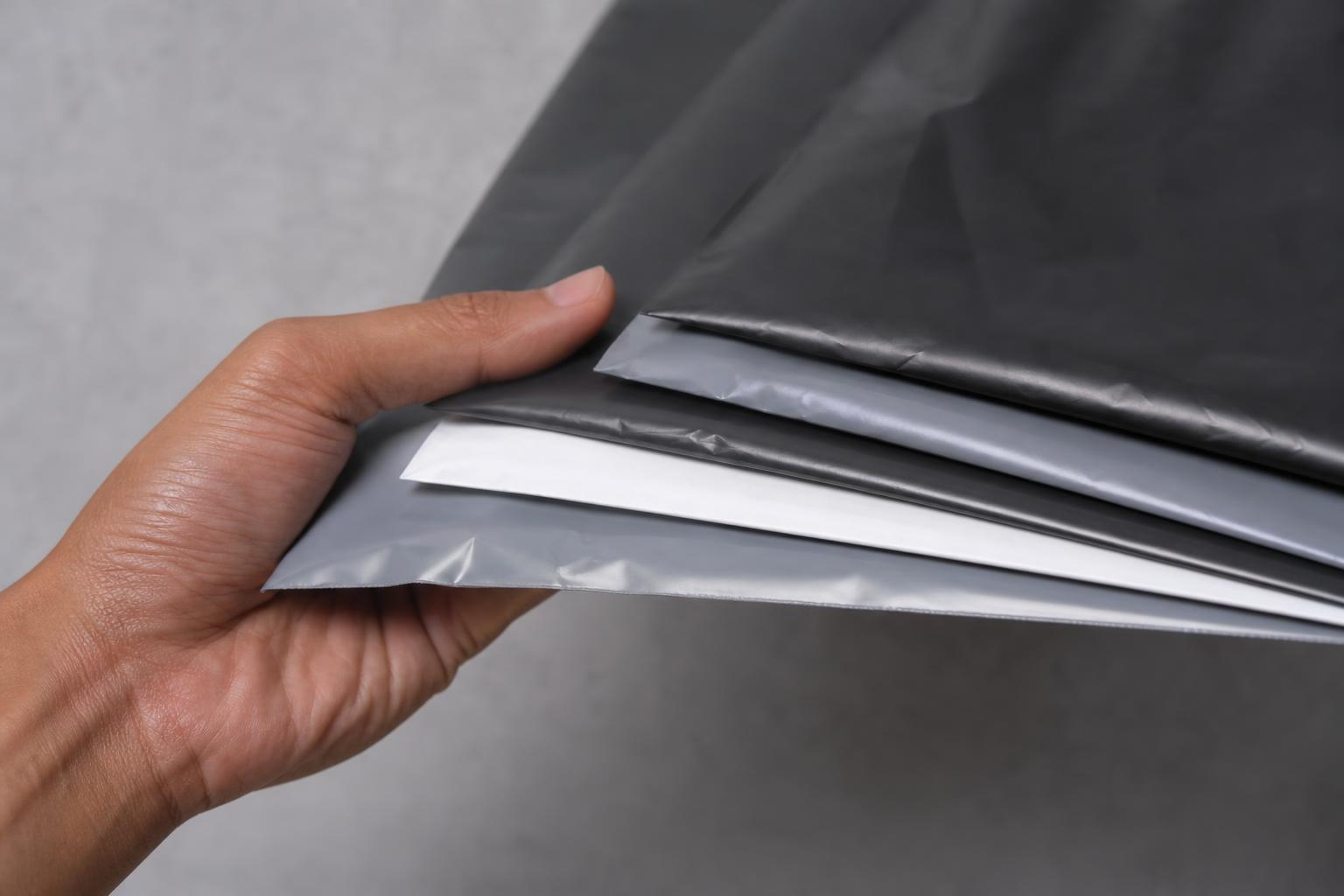
Poly mailer thickness is the first number most buyers check on a spec sheet, and it is also the one most often misread. A mailer rated at 2.5 mil is not automatically twice as tough as one at 1.25 mil, and a thicker bag is not automatically the right bag for your product. Film type, seal quality, bag size and what you pack inside all change how a mailer performs in transit. This guide explains mil, micron and gauge in plain terms, shows how LDPE and co-extruded films differ, and covers the seals that tend to fail first. By the end you should be able to write a clear spec and match it to your product before you place a bulk order.
In this article
- Key takeaways
- What poly mailer thickness means: mil, micron and gauge
- LDPE, LLDPE and co-extruded film: what the material does
- Poly mailer mil guide by product type
- Seals and closures: where poly mailers actually fail
- Poly mailer strength beyond thickness
- How to match poly mailer spec to your product
- Ordering poly mailers in bulk without samples
- Recycled and compostable mailers: thickness works differently
- Conclusion
Key takeaways
- One mil is one thousandth of an inch, or 25.4 microns. Always confirm which unit a supplier is quoting.
- Most apparel ships well in roughly 2 to 2.5 mil (about 50 to 64 microns). Heavier or sharper goods may need more, or a different format.
- Film type matters as much as thickness: an LLDPE blend or a well-made co-extruded film can outperform a thicker but weaker single-layer film.
- Seams and the adhesive strip are the usual failure points, not the middle of the film.
- Write down thickness, film structure, size, seal type and opacity before you order, because bulk buying leaves little room for trial and error.
What poly mailer thickness means: mil, micron and gauge
Thickness is quoted in several units, and the unit depends on where the supplier is based. Mixing them up is the easiest way to order the wrong product.
Mil and micron
A mil is one thousandth of an inch (0.001 in). It is not a millimetre, and that confusion causes plenty of errors. In packaging, "what is a mil" has a simple answer: a mil is a unit of thickness used mainly in North America. Many other regions quote microns (µm), where one micron is one thousandth of a millimetre.
- 1 mil = 25.4 microns (0.0254 mm)
- 1.5 mil is about 38 microns
- 2 mil is about 51 microns
- 2.5 mil is about 64 microns
- 3 mil is about 76 microns
So a mailer sold as "60 micron" is close to 2.4 mil. If you buy from suppliers in different countries, convert everything to one unit before you compare.
Where gauge fits in
In polyethylene film, gauge is an older way of saying the same thing: 100 gauge equals 1 mil, so 250 gauge is 2.5 mil. The word "gauge" means different things for other materials, such as metal sheet or stretch film, so do not assume the numbers carry over between products.
Why one number is not the whole spec
Thickness is normally an average, and real film varies across a bag. Ask whether the figure is the total thickness of all layers and whether a tolerance applies. A bag described as 2.5 mil that measures 2.2 mil in places is still within normal variation for many films, but it is a very different product if your goods are heavy. Thickness tells you how much material is there. It does not tell you how good the material is.
LDPE, LLDPE and co-extruded film: what the material does
Two mailers at the same thickness can behave very differently because of the resin and the film structure. This is the part of the spec that most listings skip.
LDPE and LLDPE
Most LDPE mailers are made from low-density polyethylene, a soft, flexible plastic that seals well and resists moisture. Many mailers also blend in LLDPE (linear low-density polyethylene), which adds puncture and tear resistance and lets the film stretch before it fails. A thin film with a good LLDPE share can resist a corner poking through better than a thicker film that is mostly basic LDPE. When you compare LDPE mailers, ask which resin or blend is used, not only the mil.
Co-extruded poly mailers
Co-extruded poly mailers are made by extruding two or three layers together in a single pass. A common structure is a white or coloured outer layer for printing and appearance, and a dark inner layer so the contents cannot be seen through the bag. The layers can also use different resins, so the film can be tuned for sealing on the inside and toughness in the middle. Co-extrusion is the reason a modern 2 to 2.5 mil mailer can be fully opaque and still strong.
Recycled content in the film
Some mailers include recycled polyethylene. This can affect colour consistency, surface feel and, depending on how it is processed, strength. It is not a flaw, but it is a reason to check the spec carefully rather than assume a recycled bag matches a virgin-resin bag at the same mil.
Poly mailer mil guide by product type
There is no universal standard for how thick a poly mailer should be. The ranges below are practical rules of thumb for soft, non-fragile goods, not guarantees. Your product shape, carrier and route can move the right answer up or down.
| Product type | Typical thickness | In microns | Notes |
|---|---|---|---|
| T-shirts, light knitwear, soft accessories | 1.5 to 2 mil | 38 to 51 µm | Low weight, no hard edges. Opacity matters more than raw strength. |
| Hoodies, jeans, bedding, multiple garments | 2 to 2.5 mil | 51 to 64 µm | The most common range for apparel and soft goods. |
| Heavy folded items, footwear in soft packs, bulky orders | 2.5 to 3 mil | 64 to 76 µm | Higher seam stress. Check seal quality as well as mil. |
| Items with corners, buckles or zips | 3 mil or more, or another format | 76 µm or more | Consider padding or a rigid pack if edges can push through. |
| Fragile or crushable goods | Not suited to poly | n/a | Use a box or protective packaging instead. |
Light, soft goods
For a single T-shirt or a lightweight scarf, going above 2 mil rarely improves delivery results. Extra film mostly adds cost and weight. Your priority is a reliable seal and enough opacity that the item inside is not visible.
Heavier or bulkier goods
As weight rises, the seams carry more load. A heavier film helps, but only if the heat seal is strong enough to match it. If your mailers are splitting at the sides rather than puncturing, moving up in thickness may not fix the problem.
When to leave poly mailers behind
Poly mailers do not cushion. If an item can crack, bend or be crushed, no thickness will protect it. Compare the options in our poly mailer vs bubble mailer decision table before you commit to a spec.
Seals and closures: where poly mailers actually fail
When a mailer arrives open or split, the film is rarely the cause. The weak point is almost always a seam or the closure.
Side and bottom seams
Poly mailers are formed by heat-sealing the film along the sides or bottom. A good seal is continuous, even in width and fully fused. A poor one has thin spots, gaps or channels where the layers did not bond. Overstuffing is the usual trigger: pressure builds at the seam, and an imperfect weld opens first. Seam strength matters more as your product gets heavier or more rigid.
The adhesive strip
Most mailers close with a pressure-sensitive adhesive strip covered by a release liner. A good strip bonds permanently, so it tears the film if someone tries to open it, which gives basic tamper evidence. Adhesives are affected by heat, cold, dust and humidity, so storage conditions in your warehouse matter. Keep cartons off the floor and away from direct sun or heaters, particularly in hot or humid climates. If you handle many returns, a mailer with a second strip may suit your workflow, though you should confirm that option is available for the product you want.
A quick seam check
Whenever you receive a new batch, do a simple test on a handful of bags you pull from different cartons:
- Seal the strip and let it rest for a day.
- Pull the bag open at the seam with firm, steady force.
- Look at how it fails. A good seal tears the film. A weak seal peels apart cleanly along the weld line.
- Check for wrinkles, gaps or thin lines along the seam.
Record what you see so you can compare future batches against the same standard.
Poly mailer strength beyond thickness
People often search for "poly mailer strength" when they really want to know which failure they are trying to prevent. There are three main ones.
Puncture resistance
Puncture happens when a sharp corner, zip or rivet pushes through the film. Resin blend and film structure matter here, and so does how the item is packed. Folding a garment so a zip faces inward, or wrapping a hard corner in a layer of paper, often does more than adding half a mil of thickness.
Tear and seam strength
Tear resistance shows how far a small nick travels. Film that starts a tear easily and propagates it quickly is a risk in sorting machinery and long routes. Seam strength shows how much load the weld can take. Both are tied to the resin and the quality of manufacture, not just the thickness reading.
Size and fill
A mailer that is too small is stressed at every point. As a guide, the item should slide in without force, and the flap should close flat without pulling the film tight. A bag with a little slack is stronger in use than a thicker bag pulled taut around its contents. Also check whether the listed size includes the flap, because the usable inside length may be shorter than it looks.
How to match poly mailer spec to your product
A clear process beats guessing. Work through these steps for each product you ship.
- Weigh the packed item. Use the heaviest typical order, not the average.
- Check the shape. Look for corners, zips, buckles, hooks or hard packaging that can load a point on the film.
- Choose the size first. Pick a bag that fits with slack, then decide on thickness.
- Pick a starting thickness from the table above, then move up only if you see punctures, or change format if you see crushing.
- Decide on opacity. If you ship low-colour or branded goods, confirm the bag is opaque.
- Decide how it will be opened. Single strip for one-way shipping, or an option for returns.
Write the spec down
Turn the decision into a short written spec: size in both inches and centimetres, thickness in mil and microns, film structure (single or co-extruded, and the resin blend if known), colour and opacity, seal type and closure. Use the same spec for every supplier you compare. It also gives your warehouse team a reference to check cartons against when they arrive.
Account for the shipping route
Domestic routes with little handling are gentler than long international routes with many transfers. Carriers in different countries also price by weight, by dimensions, or both, and their size and weight bands vary. A very thick film adds a small amount of weight, but the effect on your rate depends on the carrier's bands, so check them before assuming that a thinner bag will save money.
Ordering poly mailers in bulk without samples
Bulk buying changes how you should test. At Pack Merchants, we do not offer samples. Every product has a minimum order worth at least $500, so your spec needs to be right before you buy rather than after.
Check the spec before you order
- Measure a mailer you already use with a micrometer or caliper, so you have a reference thickness in mil and microns.
- Compare the product listing against your written spec line by line: size, thickness, film, closure and opacity.
- Remember that the minimum applies per product. If you want to compare two thicknesses, each one is its own order with its own minimum, so decide whether that is practical for you. Our guide on what a $500 minimum order actually means explains how this works in practice.
- Look at what drives unit cost, since size, thickness and volume all play a part. We cover that in what drives poly mailer cost per unit.
Payment is by bank transfer or USDT, and freight is always quoted separately for each order, so budget for it alongside the product cost.
Test after delivery
Once the cartons arrive, run your own checks: the seam test above, a pack test with your heaviest order, and a few drops from waist height onto a hard floor. If you ship through several carriers, send a few test parcels to yourself over your longest route. Keep notes, so your next order can start from evidence.
Recycled and compostable mailers: thickness works differently
If you are weighing up a more sustainable mailer, do not compare it to a standard poly mailer on thickness alone.
Recycled-content poly
Recycled-content polyethylene mailers are still polyethylene film, so the mil and seam rules above still apply. The difference is consistency: check the stated recycled content and confirm the strength you need rather than assuming equivalence with a virgin-resin bag.
Compostable films
Compostable mailers use different polymers, and they behave differently. They can be stiffer, more sensitive to heat and humidity, and have a shelf life. Thickness numbers are not directly comparable with LDPE. For garments, see our guide to compostable mailers for clothing, which covers materials, strength and certifications. Kraft paper mailers are another option if you want to avoid film altogether.
Rules differ by country
Recycling and composting systems for film vary widely. Some regions have collection points for polyethylene film, and others have none. Industrial composting is available in some places and absent in others, and the labelling rules for "recyclable" or "compostable" claims differ by country. Check the rules where you sell, and do not promise your customers a disposal route that does not exist locally.
Conclusion
Poly mailer thickness is a useful starting point, but it is only one part of the spec. Convert mil and microns so you compare like with like, check the film type and structure, and test seams and closures as carefully as the film. Match the mailer to your heaviest, sharpest typical order, write the spec down, and check it against the product before you buy. With bulk minimums and no samples, a clear spec is the best protection against ordering the wrong mailer.
Frequently asked questions
What is a mil in packaging?
A mil is one thousandth of an inch (0.001 in), equal to 25.4 microns. It is not a millimetre. It is a common unit for film thickness, especially in North America.
How thick should a poly mailer be?
For most apparel and soft goods, around 2 to 2.5 mil (51 to 64 microns) is a common range. Light items can use thinner film, while heavier or sharper goods may need more thickness or a different packaging format. Film quality and seal strength matter as well as the number.
Is a thicker poly mailer always stronger?
No. Strength depends on the resin blend, film structure and seam quality as well as thickness. A well-made co-extruded film with a strong seal can outperform a thicker but weaker single-layer bag.
How do I convert mil to microns?
Multiply the mil value by 25.4 to get microns. For example, 2.5 mil is about 64 microns. To go the other way, divide microns by 25.4.
What are co-extruded poly mailers?
They are mailers made from two or three layers of film extruded together in one process. A common structure has a white or coloured outer layer and a dark inner layer for opacity. The layers can use different resins to balance sealing, toughness and appearance.
Why do poly mailers split or open in transit?
The most common causes are overfilling, weak or uneven heat seals at the seams, and adhesive strips affected by heat, cold, dust or humidity. Choosing a larger size and checking seams on delivery usually helps more than just moving to thicker film.
Does Pack Merchants offer samples of its poly mailers?
No, we do not offer samples. Every product has a minimum order worth at least $500, so we suggest writing your spec first and checking it against the product details before you order. Freight is quoted separately for each order.
Are compostable mailers the same thickness as poly mailers?
Not directly comparable. Compostable films use different polymers and behave differently in strength, stiffness and shelf life, so the same mil figure does not mean the same performance as an LDPE mailer.
Still not sure?
Tell us what you ship and roughly how much of it, and we will recommend a specification and price it.