Packaging guide
Trash Bag Sizes Explained: Matching a Bag to Your Bin
Gallons tell you what a bin holds, not what bag fits it. Here is how to work out the right bag from two measurements, and why 38 × 58 inches suits a 55-gallon drum.
Updated Oct 6, 2026
A bag that is slightly too small slips down into the bin, and one that is far too large wastes money on every change. The gallon rating on the bin is only a rough guide, because the same capacity can be a tall narrow bin or a short wide one. Two measurements settle it.
Measure the bin, not the label
You need the bin’s height and its distance around (the circumference). For a round drum, measure the diameter and multiply by 3.14. For a square or rectangular bin, add up all four sides.
The two formulas
- Bag width (flat) must be at least half the distance around the bin. A bag lies flat as two layers, so its flat width only needs to wrap half the circumference.
- Bag length must be the bin height, plus half the bin’s width (to cover the base), plus 3 to 4 inches of overhang to fold over the rim.
For a standard 55-gallon drum, 23 inches across and 35 inches tall: the distance around is about 72 inches, so the bag must be at least 36 inches wide flat. The length is 35 + 11.5 + 4, about 50 inches. A 38 × 58 inch bag clears both, with around 8 inches to spare, which is exactly why it became the standard for that drum.
A working reference
| Bin capacity | Typical bag (flat, inches) |
|---|---|
| 30 gallon | 30 × 36 |
| 33 gallon | 33 × 40 |
| 40 to 45 gallon | 40 × 46 |
| 55 to 60 gallon | 38 × 58 |
| 95 gallon | 61 × 68 |
Treat the table as a starting point rather than a rule. Bag dimensions vary by maker, and a bin from one manufacturer can differ from another’s at the same rated capacity. Your tape measure beats any chart.
Too small versus too large
Too small is the expensive error. The bag has no overhang, falls into the bin once it has weight in it, and the rim cuts into it. It also stretches taut over the lip, which makes it far more likely to tear. If you are choosing between two sizes, take the larger.
Too large is the cheap error, and it costs more than people notice. Extra film is extra plastic you pay for and throw away. If a bag overhangs the rim by a foot or more every time, you are paying for a size up that does no work, and over thousands of bags that is real money.
Gallons are not a measure of strength
Two bags that fit the same drum can be completely different products. One may be 1 mil thick and the other 3 mil, and the size tells you nothing about which holds up. Our guide to trash bag thickness covers that second decision, and it matters more than the size does once the bag fits.
Standardise on as few sizes as you can
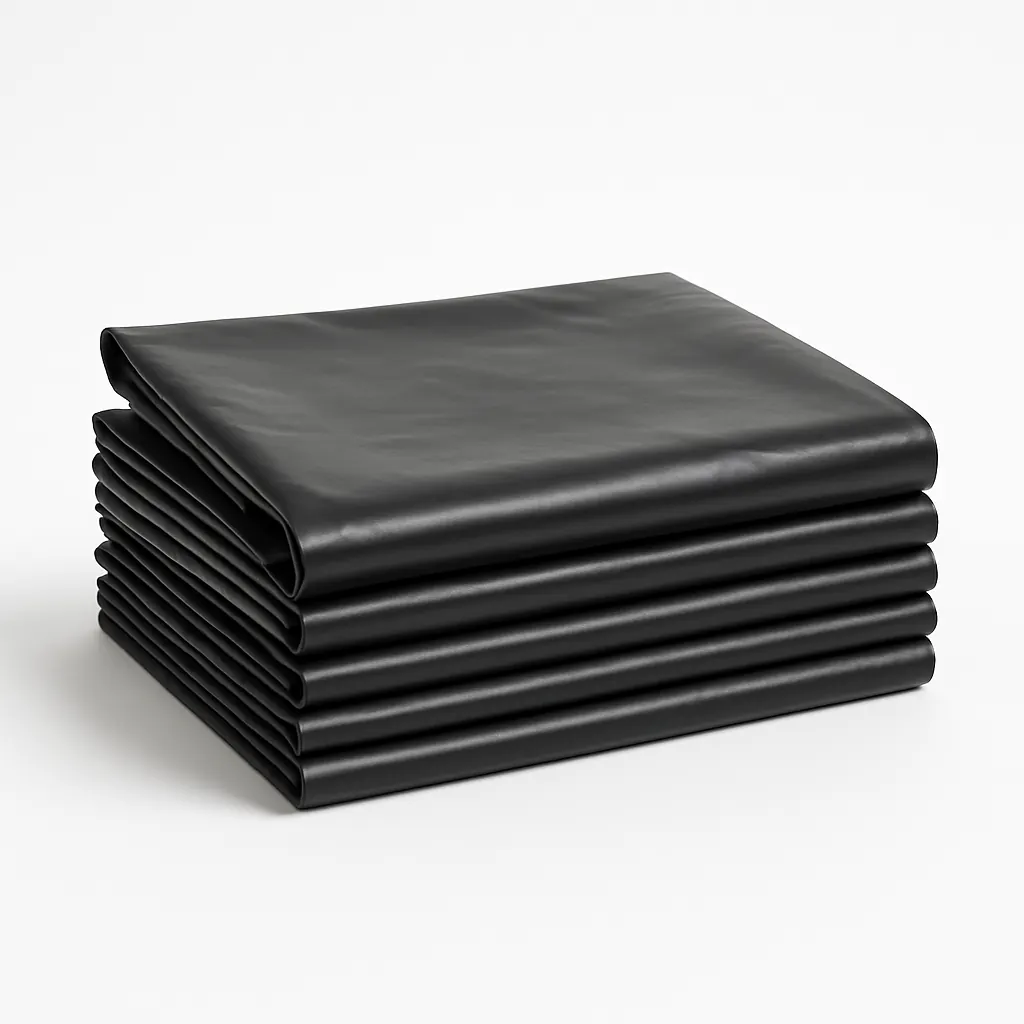
A warehouse that runs five bin sizes stocks five bags, forecasts five lines, and loses money to the wrong bag being grabbed in a hurry. If you can consolidate onto one or two drum sizes, the volume buying gets better and the stockroom gets simpler. For most warehouses the 55 to 60 gallon drum with a 38 × 58 inch bag is the workhorse, and the one we stock.
Products in this guide
Still not sure?
Tell us what you ship and roughly how much of it, and we will recommend a specification and price it.