
Packaging guide
Trash Bag Thickness: Mil, Micron, Gauge and What Matters
Mil, gauge, micron and "mil equivalent" all describe thickness, and not always honestly. How to read them, and why material matters as much as the number.
Updated Oct 6, 2026
Thickness is the number printed most prominently on a box of bags and understood least. Several different units are in use, a few marketing terms muddy them further, and the number alone does not tell you how strong the bag is.
Three units, one measurement
- Mil is one thousandth of an inch. It has nothing to do with millimetres, and that confusion is common.
- Micron is one thousandth of a millimetre. One mil is 25.4 micron.
- Gauge is a hundredth of a mil: 100 gauge equals 1 mil.
| Mil | Micron | Gauge | Typical use |
|---|---|---|---|
| 1.0 | 25 | 100 | Light office waste |
| 1.5 | 38 | 150 | Kitchen and general refuse |
| 2.0 | 51 | 200 | Heavy general and warehouse refuse |
| 3.0 | 76 | 300 | Contractor and sharp debris |
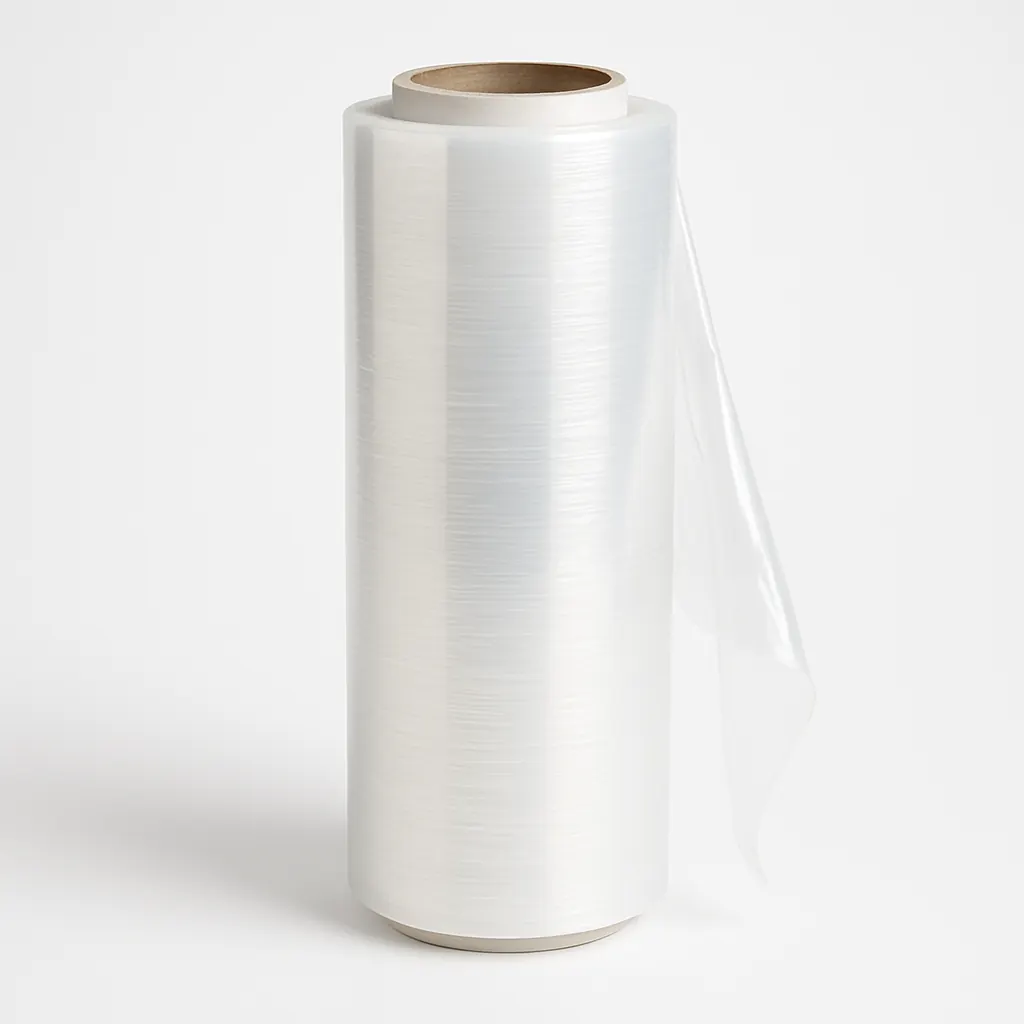
If you also buy pallet wrap, note that stretch film gauge uses the same scale. An 80 gauge stretch film is 0.8 mil, which is why it is so much thinner than any refuse bag.
The material matters as much as the number
Bags are made from two broad families of polyethylene, and they behave differently at the same thickness.
Low-density and linear low-density (LDPE and LLDPE) is soft, stretchy and resistant to punctures and tears. It is the right material when the contents have corners, and it is what contractor and heavy-duty bags are made from.
High-density (HDPE) is stiffer, crinkly to the touch and strong along the film, so it can be made very thin and still carry weight. It tears more readily once punctured. That makes it good for clean, soft, light waste, such as office paper, and a poor choice for anything sharp.
This is why a thin high-density bag can outperform a thicker low-density one on paper waste while failing on a single protruding nail.
What “mil equivalent” really means
You will see claims such as “1.7 mil EQ” or “equivalent to 2 mil”. These are not measured thicknesses. They describe a thinner film, usually high-density, that the seller says performs like a thicker one.
That may be true for some waste. It is not a guarantee, and it is not comparable to an actual 1.7 mil measurement. When you compare prices between two bags, make sure both quote a real thickness. If one says “EQ”, ask for the actual number.
What you are really paying for
A bag is mostly plastic by weight, so thickness drives cost directly. A 38 × 58 inch bag at 3.0 mil holds about 0.44 pounds of film. At 2.0 mil it is about 0.29 pounds, and the price follows the weight. A heavier bag is not hiding a cheaper trick: you are buying more plastic.
That also tells you where to be suspicious. A bag priced far below the film it contains is almost certainly thinner than the box says.
Choosing a thickness
- Soft, light, clean waste — 1.0 to 1.5 mil is enough.
- General warehouse refuse, offcuts, packaging — 2.0 mil.
- Sharp edges, strapping, pallet debris, heavy loads — 3.0 mil.
Our comparison of contractor and standard bags works through when the heavier bag actually saves money.
Products in this guide
Still not sure?
Tell us what you ship and roughly how much of it, and we will recommend a specification and price it.