Packaging guide
Contractor vs Standard Trash Bags: When the Heavy Bag Pays
A 3 mil contractor bag costs close to three times a standard liner. It only earns that back if the cheap one is failing. Here is the arithmetic.
Updated Oct 6, 2026
Contractor bags have a reputation as the safe choice, and buyers who have been burned by a split bag tend to stock them everywhere. They are the right tool for some waste and an expensive habit for the rest. Whether a heavier bag pays depends on one number: how often the cheaper bag fails.
What you are comparing
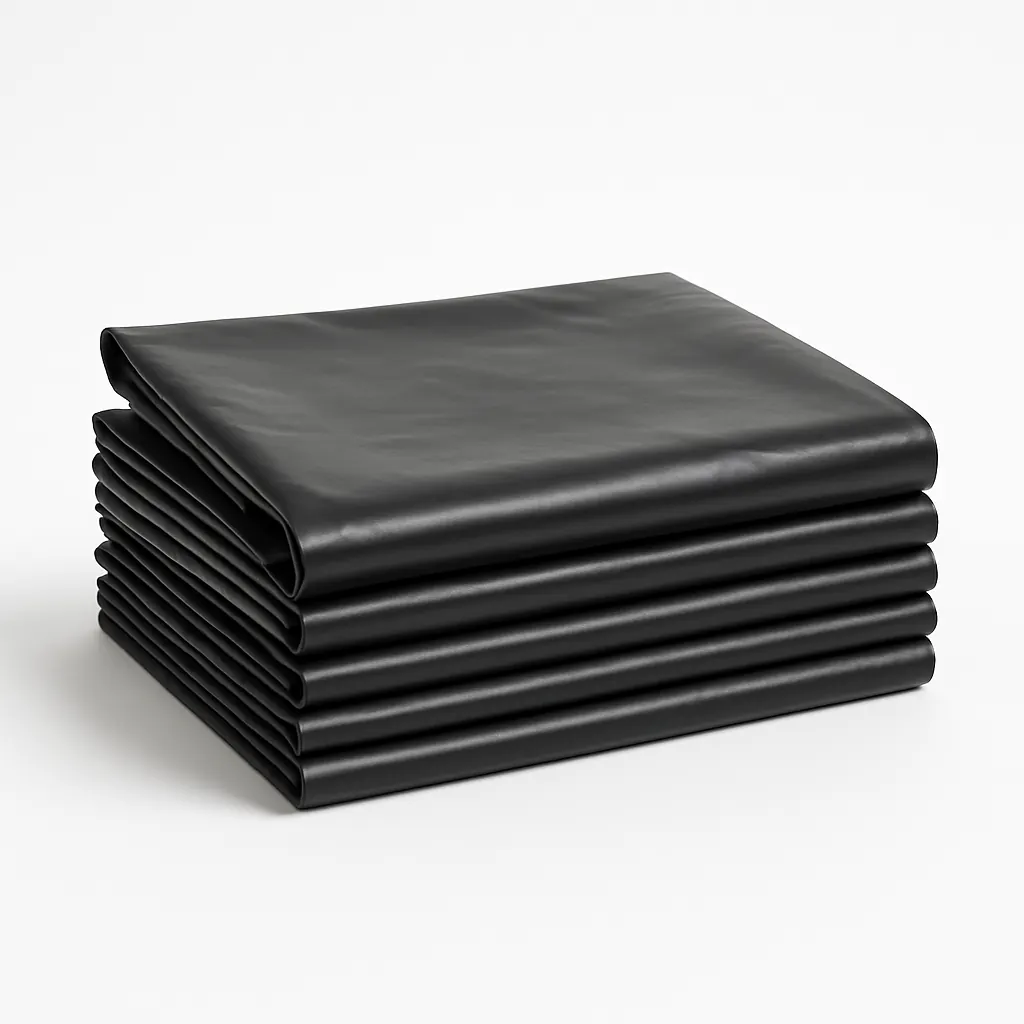
For the 55 to 60 gallon drum, a standard liner is around 1.2 to 1.5 mil. A contractor bag is 3.0 mil. The difference is not marketing: the heavier bag contains roughly twice the plastic, as the guide to bag thickness shows, and that is what you pay for.
The real cost of a failed bag
A bag that splits costs more than the bag. Someone has to stop, clean the floor, re-bag the waste and fetch another liner. Count that labour honestly: five minutes at $20 an hour is about $1.67.
So the cost per bag you actually use is the price of the bag, plus the failure rate multiplied by the price of a replacement bag and the clean-up.
The break-even, worked through
Take illustrative numbers. A standard bag costs $0.30, a contractor bag $0.84, and a failure costs $1.67 of labour plus a replacement bag.
- A standard bag that fails 5% of the time costs $0.30 + 0.05 × ($0.30 + $1.67), about $0.40 per bag used.
- A contractor bag that fails 0.5% of the time costs $0.84 + 0.005 × ($0.84 + $1.67), about $0.85 per bag used.
On ordinary waste the standard bag wins comfortably. The contractor bag only breaks even when the standard bag is failing roughly 28% of the time, more than one bag in four. Below that, the heavy bag is simply the more expensive way to move the same rubbish.
Substitute your own prices and your own wage. The shape of the result will hold: heavy bags pay when failure is common, not when it is rare.
Where contractor bags earn their cost
- Anything with a point or an edge — broken pallet timber, nails, metal strapping, glass, plasterboard.
- Dense or heavy waste — offcuts, damaged stock, wet material.
- Bags that are dragged or thrown into a skip rather than lifted.
- Waste you cannot afford to spill — anything hazardous to clean up.
In those cases the failure rate of a light bag is not 5%, it is far higher, and the heavy bag is cheaper in use as well as safer.
The middle option most buyers skip
Between the two sits 2.0 mil. It carries about two-thirds of the film of a contractor bag, which is why it costs materially less, and it handles most packaging waste: cartons, film, paper and light offcuts. For a warehouse running mixed waste it is often the right default, with 3.0 mil kept for the bins that see sharp debris.
A sensible way to decide
- Walk the site and note which bins take sharp or heavy waste. Those get 3.0 mil.
- Put 2.0 mil in everything else for a month.
- Count the splits. If a bin loses more than about one bag in twenty, move it up. If none fail, you may be able to go lighter.
That is a cheap experiment, and it replaces a blanket decision with a measured one.
Products in this guide
Still not sure?
Tell us what you ship and roughly how much of it, and we will recommend a specification and price it.