
Packaging guide
Poly Mailers vs Compostable Mailers
Compostable mailers cost more and, for most customers, end up in the same bin as everything else. Here is when that trade is worth making and when recycled poly is the better environmental choice.
Updated Sep 8, 2026
This is the packaging decision most ecommerce brands agonise over, and the marketing on both sides is unhelpful. The honest answer depends on something most sellers never check: what your customers can actually do with the bag once it is empty.
What "compostable" actually requires
Nearly all compostable mailers are certified for industrial composting — sustained high temperatures over weeks, in a facility. They are not designed to break down in a garden compost heap, and they will not break down meaningfully in landfill, where the absence of oxygen stops the process almost entirely.
So the question is not whether the bag can compost. It is whether your customer has access to a collection that reaches an industrial composter. In most regions, for most households, that access does not exist for packaging.
When it does not, a compostable mailer goes in general waste and performs no better than any other bag — while having cost you more and, because it cannot go in plastic recycling, having removed the one route that was available.
The cost difference is real
Compostable film costs meaningfully more per unit than polythene, and the gap widens at larger sizes. On a thousand parcels that is a number worth being deliberate about rather than absorbing on principle.
It also has shorter shelf life. Compostable films degrade in storage — heat and humidity accelerate it — so buying two years of stock to get a better rate is a false economy. Buy what you will use within about a year.
Where recycled poly quietly wins
A recycled poly mailer is made from post-consumer material, is thinner and lighter than compostable film, and stays inside an existing recycling stream. For a customer with kerbside soft-plastic collection or a supermarket drop-off, it has a genuine end-of-life route.
It is also stronger for its weight, which matters more than it sounds: a bag that splits gets the parcel repacked or returned, and a returned parcel outweighs any packaging decision on both cost and carbon.
For a lot of brands, recycled poly is the choice that does the most environmental good per pound spent. It is a less appealing thing to put on a product page than "compostable", which is exactly why it is worth thinking about carefully.
When compostable is the right call
There are real cases, and they are not marketing:
- Your customers genuinely have the collection. Some regions and many commercial customers do.
- You sell into a market where it is expected. Zero-waste, refill and organic categories, where arriving in polythene actively costs you the sale.
- Your product is already compostable — soap, food, dry goods — so the whole parcel goes one way and the customer does not have to separate anything.
In those cases the higher unit cost buys something real, and you should say so plainly on the product page rather than leaving the customer to guess.
The option most people skip
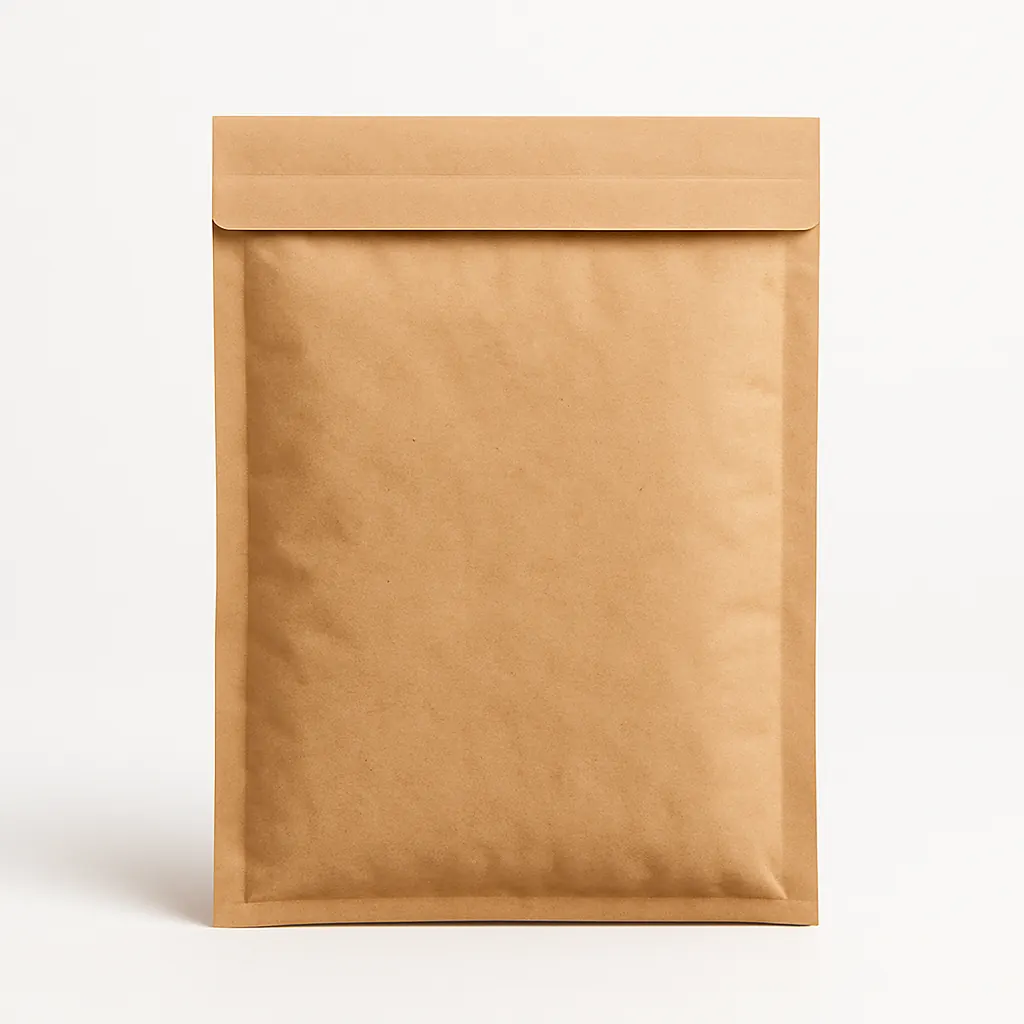
Paper mailers are recyclable in ordinary kerbside collection almost everywhere, with no special stream and no consumer decision required. They are less water resistant and heavier than film, which rules them out for some goods, but for dry non-fragile products they sidestep the entire debate.
The short version
- Most brands, most products — recycled poly. Best real-world outcome per pound.
- Zero-waste positioning, or customers with real composting access — compostable, and explain the disposal route.
- Dry goods, no water risk — paper mailers, which need no explanation at all.
- Virgin poly — only where recycled content is not available in the specification you need.
All four are stocked at 1,000-unit minimums with pricing published, so you can compare the actual cost per parcel rather than the cost per claim. If you are not sure which your customers can dispose of, tell us where you ship and we will tell you what is realistic there.
Products in this guide


Still not sure?
Tell us what you ship and roughly how much of it, and we will recommend a specification and price it.